


“I’ve never really focused on my ranking per se because it’s out of my control. I try and do the right thing each week, and the ranking will look after itself.”
—Eugenie Bouchard (Canadian Athlete)
The rankings are out. The Number One and the Top Twenty are named for each breed. The top dogs in each Group and the Top 100 show dogs are final for the year. Posts by proud owners and handlers are made on social media, ads are published highlighting the number, and plans are made to attend National Specialty events to receive awards and participate in Top Twenty events. There is a lot of buzz surrounding the rankings.
If your dog won several Bests of Breed and maybe one or more Group placements, I am sure you checked to see if your dog made the lists. And which list? Breed – which counts all the dogs defeated in the breed; All-Breed – which includes all the dogs beaten when winning a Group placement or Best in Show in addition to the dogs in the breed. What about the National Owner-Handled Series? Grand Champion points? Who can resist looking? I know I did, even for my young dog who was only shown as a special at three clusters near the end of the year (and he made sixth in All-Breed).
And yet, with all the pride of accomplishment and fame we perceive when we see our dog’s name in the rankings, what does it do? After the initial buzz, what do we do with it?
Ranking is useful for folks who run ads in the dog magazines; it tells the reader the dog is competitive and has done well. Many advertisers do so in the hope or belief it influences judges in the future. There’s a bit of gamesmanship in doing this. Is a ranking of 10th in a low-entry breed as impactful as a dog that attains 10th in a popular breed that regularly has large entries? Many times, proud owners, or people trying to impress others, will reach for something unique about their dog that will give them a more impressive way to state their ranking. That’s when we see the Number One… pick a color and sex of a breed or coat. When we check the list, it might actually be Number 22 on the list. A bit misleading, even though accurate.
People also pursue rankings in the hope of being invited to their breed’s Top Twenty competition, usually a special evening competition with formal attire, its own catalog, a trio of judges, an audience composed of fellow breeders and exhibitors, and a lot of cache to being named the winner from among the top dogs in the breed. Top Twenty competitions are a wonderful way to show off your dog to others who share your passion for your breed.
Once the initial excitement of the rankings being released is over, then the feeling of celebrity and renown quickly wears off. Few people can remember the top dog in their breed more than two or three years in the past. In some cases, the dog might be well known because they won Westminster or Royal Canin, but I’ve discovered in conversations with other exhibitors that most don’t recall the name.
There is, of course, some negativity associated with the rankings. Sour grapes and poor sportsmanship sometimes lead to things said and done to try to remove the dog that is ranked ahead. And, of course, some people commenting on social media will always tell others that the top-ranked dogs aren’t the best, they are simply (take your pick, and multiple choices are allowed):
These are unfortunate beliefs because the majority of the dogs that have made the rankings are truly lovely dogs and excellent representatives of their breed. Additionally, and especially in the lesser-known breeds, it is an excellent way to get breed representation for both the show world and the public.
Many breeders are of the opinion that the Breed ranking is the most important ranking because it reflects the accomplishments of the dog against others of its own breed. For TV show commentary, it seems the All-Breed ranking carries more weight as they impress their audience with the number of Bests in Show, Group wins, and overall top rankings. And then there are exhibitors and breeders who believe the rankings should be done away with. They especially point out the issue of people breeding to a dog simply because it’s ranked Number One.
I believe rankings are useful for the breeds that hold a Top Twenty event, for establishing the invitees to Westminster and the invitees to the NOHS Finals, and similar events that have established ranking as a criterion. For some of these special events, the numbers from AKC are used, but their qualification dates are different from the calendar year. It’s also useful to keep people showing their dogs at a time when interest in our sport is waning and numbers are down.
Seeing your dog’s name in the rankings is gratifying. Sometimes it’s a wonderful surprise.
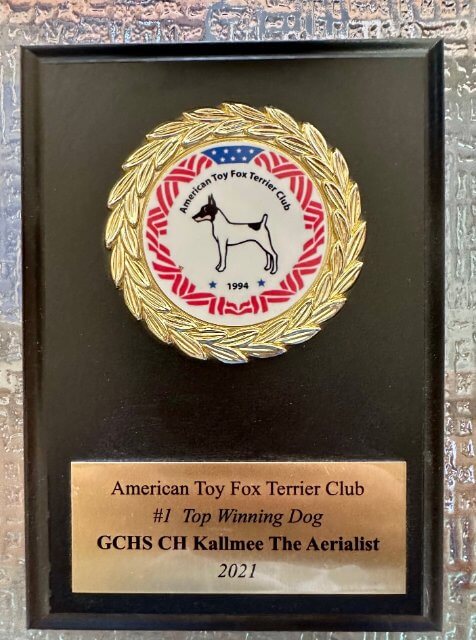
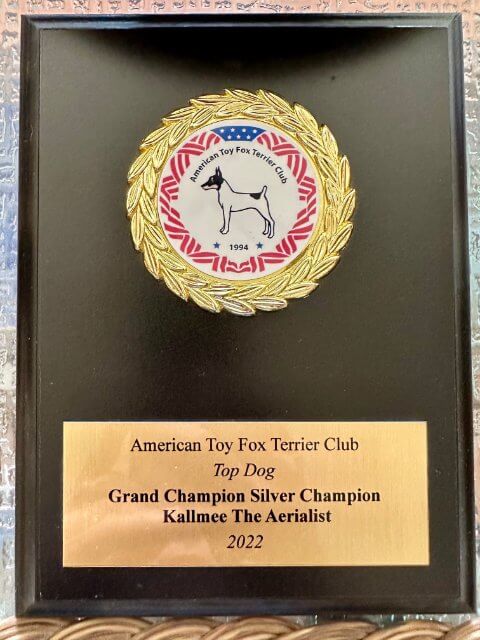
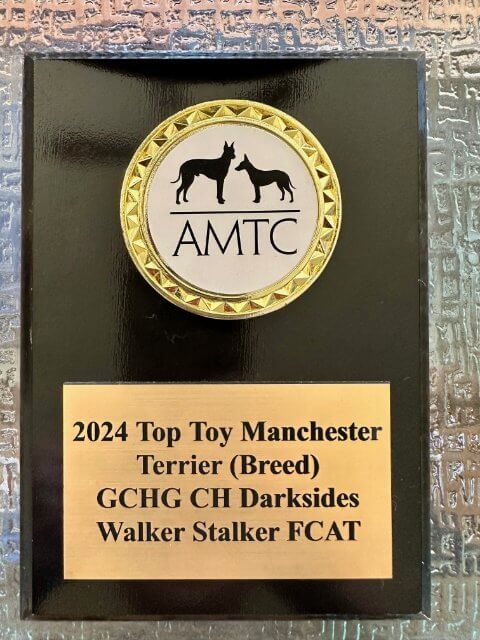
In early 2024, I didn’t have a Toy Fox Terrier special. Flyer, who had been Number One for two years, was retired, Gemma was spending time in the whelping box, others were retired, and the up-and-comers weren’t old enough. I brought out Ricky, my Toy Manchester Terrier, to play in the Veterans classes and special here and there. He looked great and really enjoyed coming back out to play with me in the ring. I was thrilled when the rankings for 2024 were posted and he was named as Number One in Breed and second in All-Breed for Toy Manchesters. For that I got lovely memories in the ring with my special boy and a small plaque from the club. In another year or two, only a few breeders will remember he was Number One. I’ll never forget our wonderful year together.
Rankings can also generate excitement and engagement. While sometimes criticized for becoming a numbers game, rankings generate interest and encourage participation in the sport, especially with the advent of the Grand Championship titles a few years ago. With more dogs staying in the rings, competing as specials for longer periods, the rankings have taken on more significance for many exhibitors and owners. A dog’s overall placement against other dogs over a year of showing offers significant prestige to most breeders and handlers. The rankings are touchstone, seen as validating their hard work and dedication to the sport.
It’s the new year. If your dog was listed in the rankings for last year—congratulations! And when the list comes out each month for this year, definitely check to see if your dog is listed. I know I will!
Good luck in the ring!